
System Integrations (ERP, CRM, SAP)
We integrate systems (ERP, CRM, SAP) with each other and external services for seamless data exchange and automation.
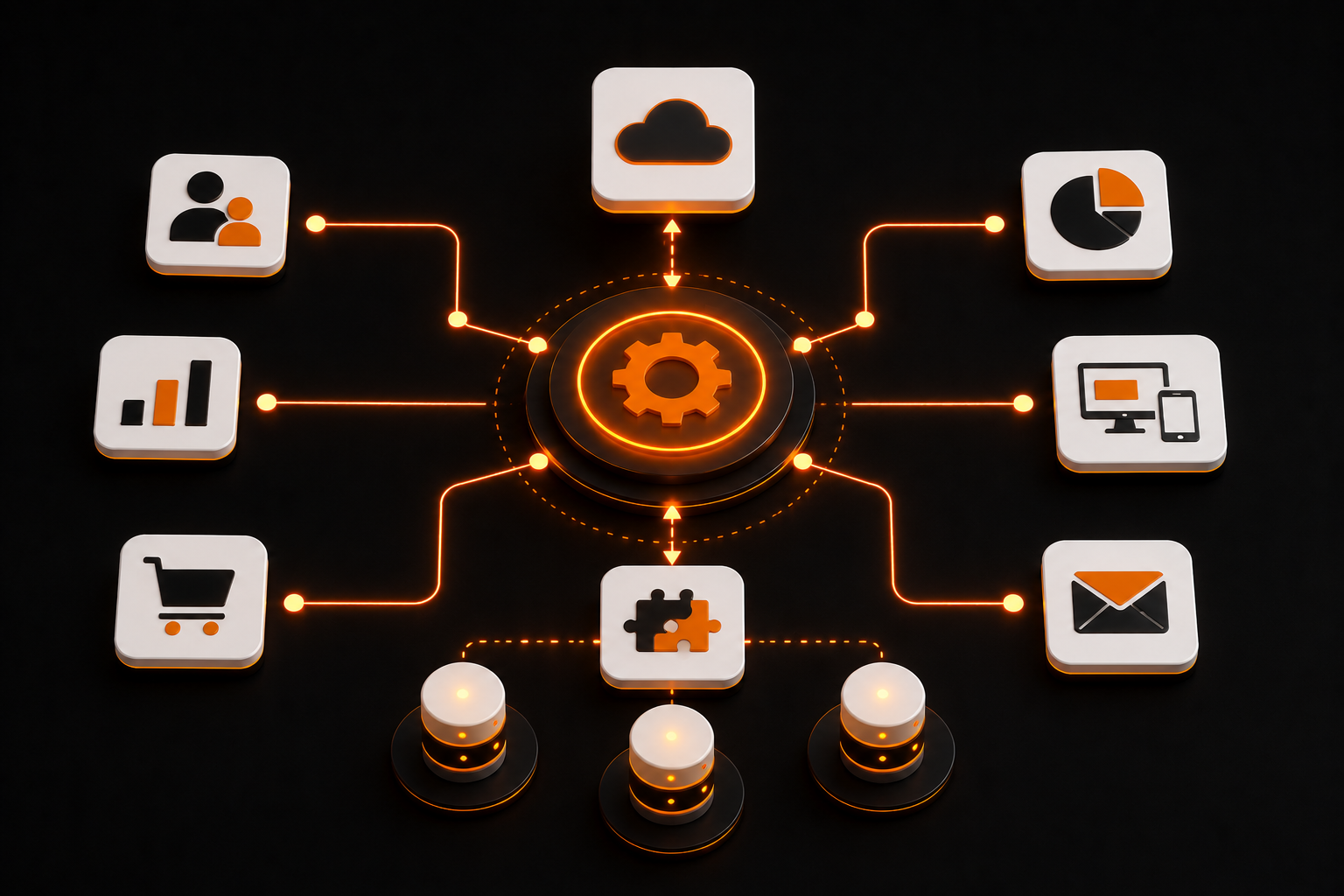
System integration is the process of connecting different software solutions into a unified ecosystem. It enables automated data exchange and synchronized business processes.
ERP, CRM, SAP, and other systems can work together efficiently, forming a single digital infrastructure.
01When businesses need integrations
Integrations are essential when multiple systems are in use.
- Multiple IT systems
- Manual data entry
- Data inconsistencies
- Need for automation
- Business growth
02What integrations solve
Integrations improve connectivity and efficiency.
- Data exchange
- System synchronization
- Process automation
- Error reduction
- Efficiency improvement
03Types of integrations
There are several integration approaches.
- API integrations
- Webhooks
- ESB
- ETL processes
- Middleware
04What we can build
We implement integrations tailored to your business.
- ERP and CRM integration
- Website and app integrations
- Payment system integrations
- Bank integrations
- External API integrations
- Process automation
- Integration support
05Integration architecture
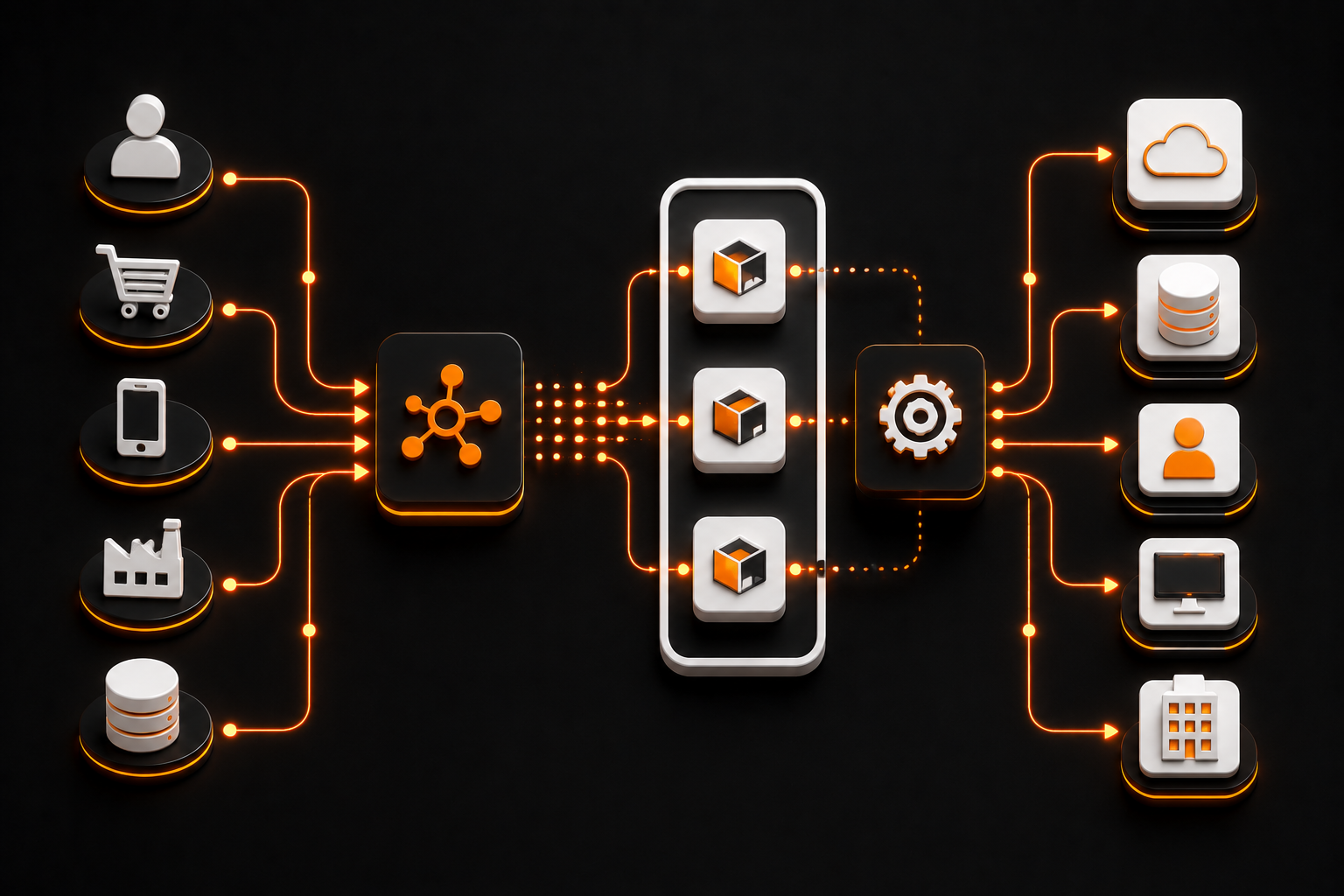
Integrations can follow different architectural patterns.
- Point-to-point
- Microservices
- Event-driven
- Centralized buses
- Hybrid approaches
06Reliability and security
Integrations must be stable and secure.
- Error handling
- Retry mechanisms
- Logging
- Authentication
- Access control
07Implementation process
Integration is a structured process.
- System analysis
- Integration design
- Development
- Testing
- Launch
- Support
08Why it must be done right
Integration errors can cause data loss and system failures.
Proper implementation ensures reliable operations.
09Business results
Integrations unify systems into a single ecosystem.
- Automation
- Error reduction
- Time savings
- Efficiency
- Digital transformation

Consultation request
Want to discuss a solution for your business?
Describe the task, and we will help define the architecture, implementation stages, and a practical delivery plan.