
Information Portals
We develop information portals with structured content, search, filtering, and efficient management of large data volumes.
An information portal is a complex web resource designed for publishing, structuring, and searching large volumes of content. These include news websites, knowledge bases, industry portals, directories, or media platforms.
Unlike regular websites, portals must efficiently handle large datasets, provide intuitive navigation, and allow users to quickly find relevant information.
01When a business needs an information portal
An information portal is needed when a business works with large amounts of content and wants to organize and present it effectively.
- Launching a news or media project
- Creating a knowledge base or documentation system
- Developing an industry portal
- Building catalogs or aggregators
- Publishing large volumes of content
02What problems a portal solves
Information portals help users quickly access relevant data and interact with content efficiently.
- Structuring large amounts of information
- Easy navigation and search
- Content filtering and sorting
- Content personalization
- User engagement improvement
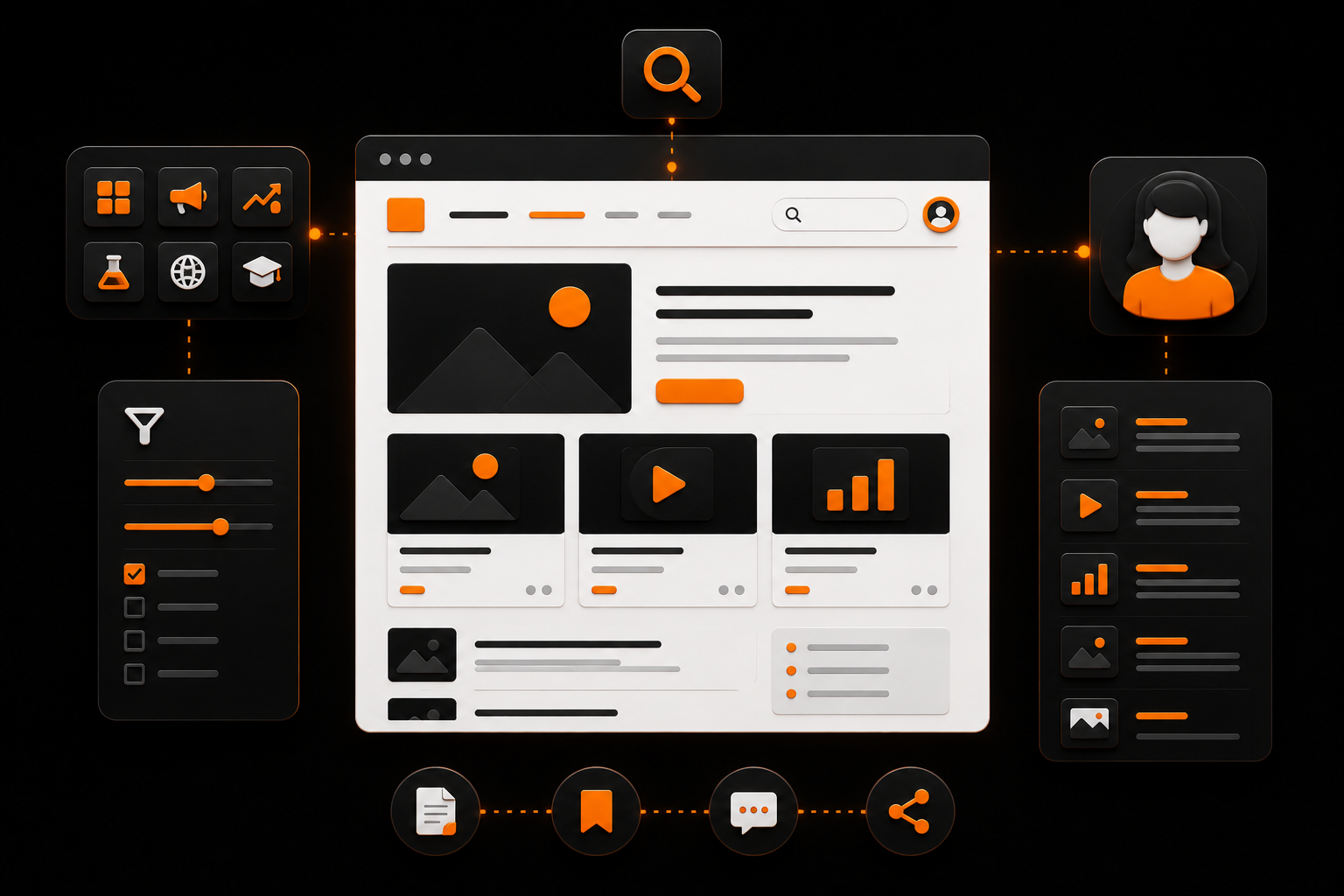
03Key components of a portal
An effective information portal includes several essential features.
- Categories and structure
- Search functionality
- Filters and tags
- Content cards
- Content publishing system
- User accounts (if needed)
04What we can build
We build information portals focused on scalability, performance, and usability for both users and administrators.
- Flexible content structure
- Advanced search and filtering
- CMS integration
- Multilingual support
- External integrations
- User behavior analytics
- High performance under load
05Working with large data
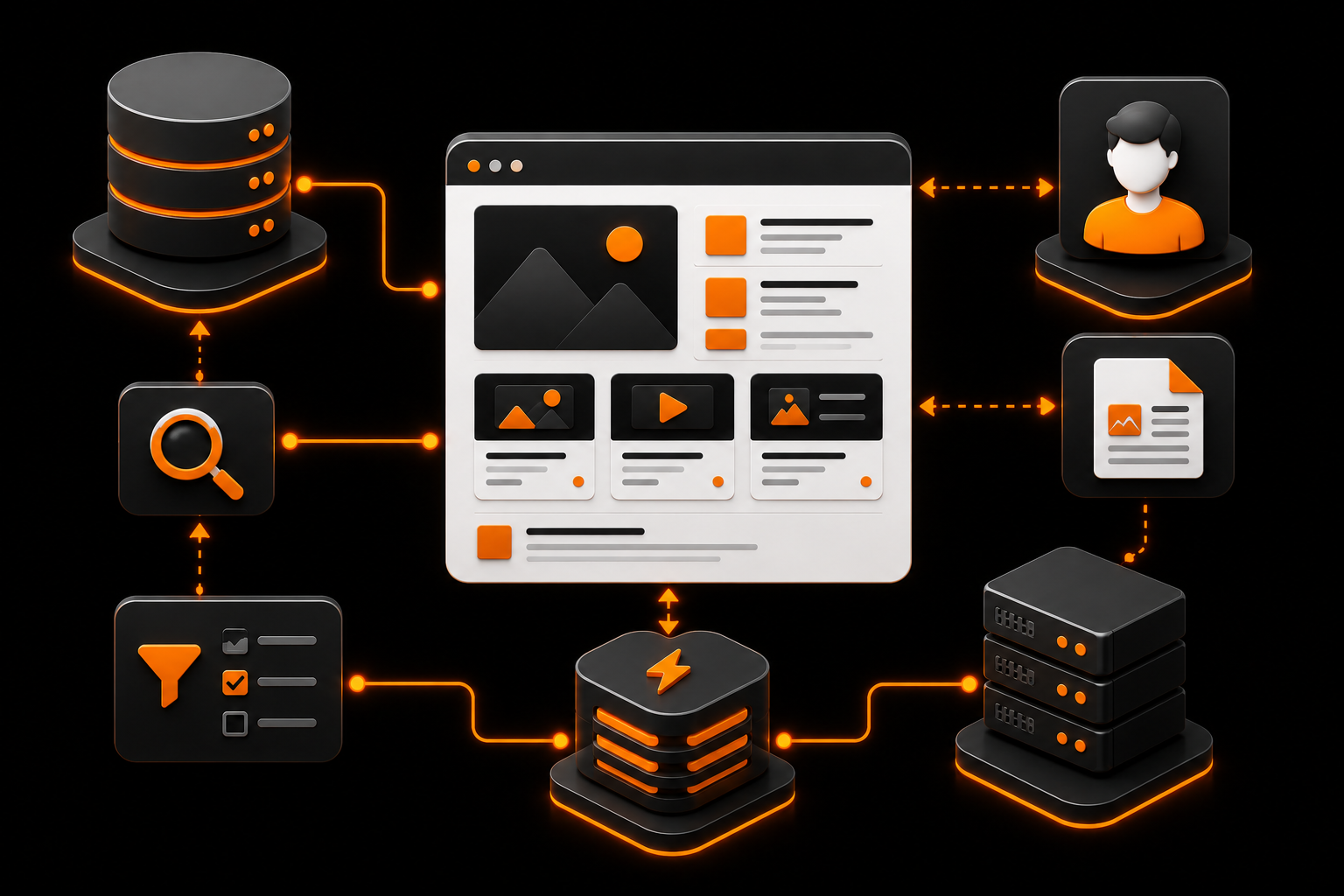
Handling large volumes of content is a core aspect of portals. Performance and usability must remain high regardless of data size.
- Database optimization
- Caching
- Search indexing
- Pagination and lazy loading
- SEO optimization
06Development process
Portal development starts with designing the content structure and user interaction logic.
- Content and structure analysis
- UX and navigation design
- UI design
- Backend and frontend development
- CMS and search integration
- Performance testing
- Launch and further development
07Why architecture matters
Poor architecture can lead to slow performance and scalability issues when dealing with large datasets.
A well-designed architecture ensures stability, speed, and a smooth user experience even as the audience grows.
08Business result
An information portal becomes a central hub for content and audience interaction.
- Traffic growth
- Increased user engagement
- Longer session duration
- Stronger brand authority
- Monetization through ads or subscriptions

Consultation request
Want to discuss a solution for your business?
Describe the task, and we will help define the architecture, implementation stages, and a practical delivery plan.