
ETL / ELT Processes & Data Integration
We develop ETL / ELT processes for extracting, transforming, and loading data into analytics systems.
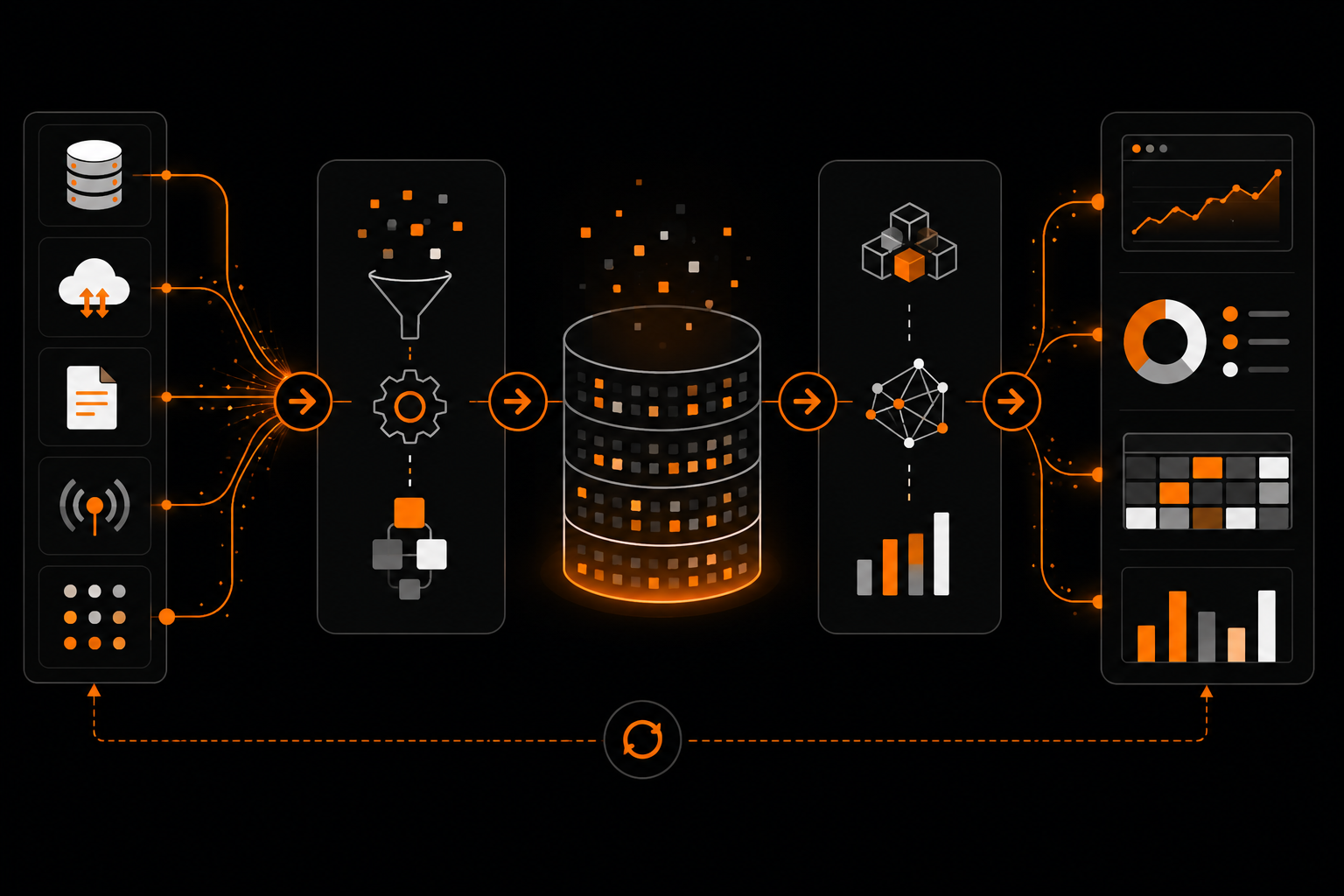
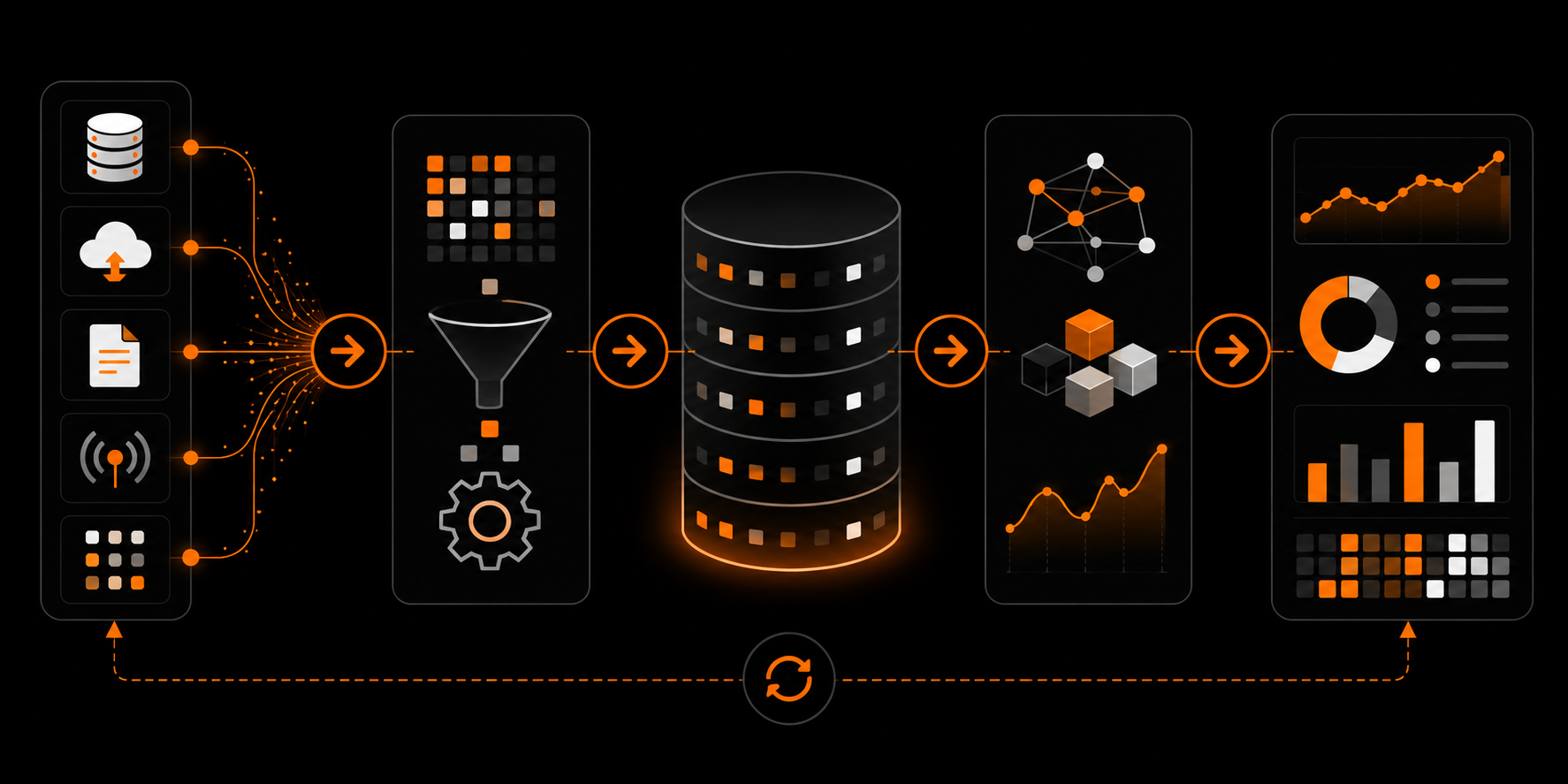
ETL (Extract, Transform, Load) and ELT are processes used to collect data from various sources, transform it, and load it into analytical systems or data warehouses.
These processes are a core part of data engineering and enable data preparation for analytics, reporting, and machine learning.
01When businesses need ETL / ELT
ETL is required when data comes from multiple systems and needs processing before use.
- Multiple data sources
- Different data formats
- Analytics requirements
- System integrations
- Large data volumes
02What ETL / ELT solves
ETL processes transform raw data into structured and usable formats.
- Data extraction
- Data cleaning and normalization
- Data transformation
- Loading into DWH or BI
- Process automation
03ETL vs ELT
There are two main approaches to data processing.
- ETL — transform before loading
- ELT — transform after loading
- ETL suits traditional systems
- ELT suits cloud and big data
- Choice depends on architecture
04What we can build
We build scalable and reliable ETL / ELT pipelines.
- Data source integrations
- ETL/ELT pipeline development
- Data transformation and cleaning
- Pipeline automation
- DWH and BI integration
- Monitoring and logging
- Error handling
05Tools and technologies
Various tools and technologies are used for ETL implementation.
- Apache Airflow
- Talend, Informatica
- Python and SQL
- Cloud platforms (AWS, GCP, Azure)
- Kafka and streaming
06Performance and reliability
ETL pipelines must be stable and capable of handling large-scale data processing.
- Parallel processing
- Error handling
- Retries
- Logging
- Monitoring
07Development process
ETL development requires understanding data sources and business logic.
- Data source analysis
- Pipeline design
- Transformation development
- Data loading setup
- Testing
- Launch and monitoring
08Why it must be done right
ETL errors lead to incorrect analytics and data loss.
A reliable pipeline ensures data accuracy and consistency.
09Business results
ETL processes become the backbone of data operations and analytics.
- Up-to-date data
- Automated processing
- Better analytics quality
- Reduced manual work
- Scalability

Consultation request
Want to discuss a solution for your business?
Describe the task, and we will help define the architecture, implementation stages, and a practical delivery plan.