
Data Warehouses (DWH)
We design and implement data warehouses (DWH) for data consolidation, analytics, and reporting.
A Data Warehouse (DWH) is a system designed for centralized storage and analysis of data from multiple sources. It allows businesses to consolidate information and use it for decision-making.
DWH is the foundation for analytics, BI systems, and reporting, providing a single source of truth for business data.
01When a business needs a DWH
A data warehouse is needed when data is scattered across systems and requires consolidation and analysis.
- Multiple data sources (CRM, ERP, website)
- Complex analytics
- Large data volumes
- Reporting requirements
- Business growth and scaling
02What DWH solves
DWH enables centralized data storage and analysis.
- Data consolidation
- Historical data storage
- Data preparation for analytics
- Reporting
- Data quality improvement
03Key components
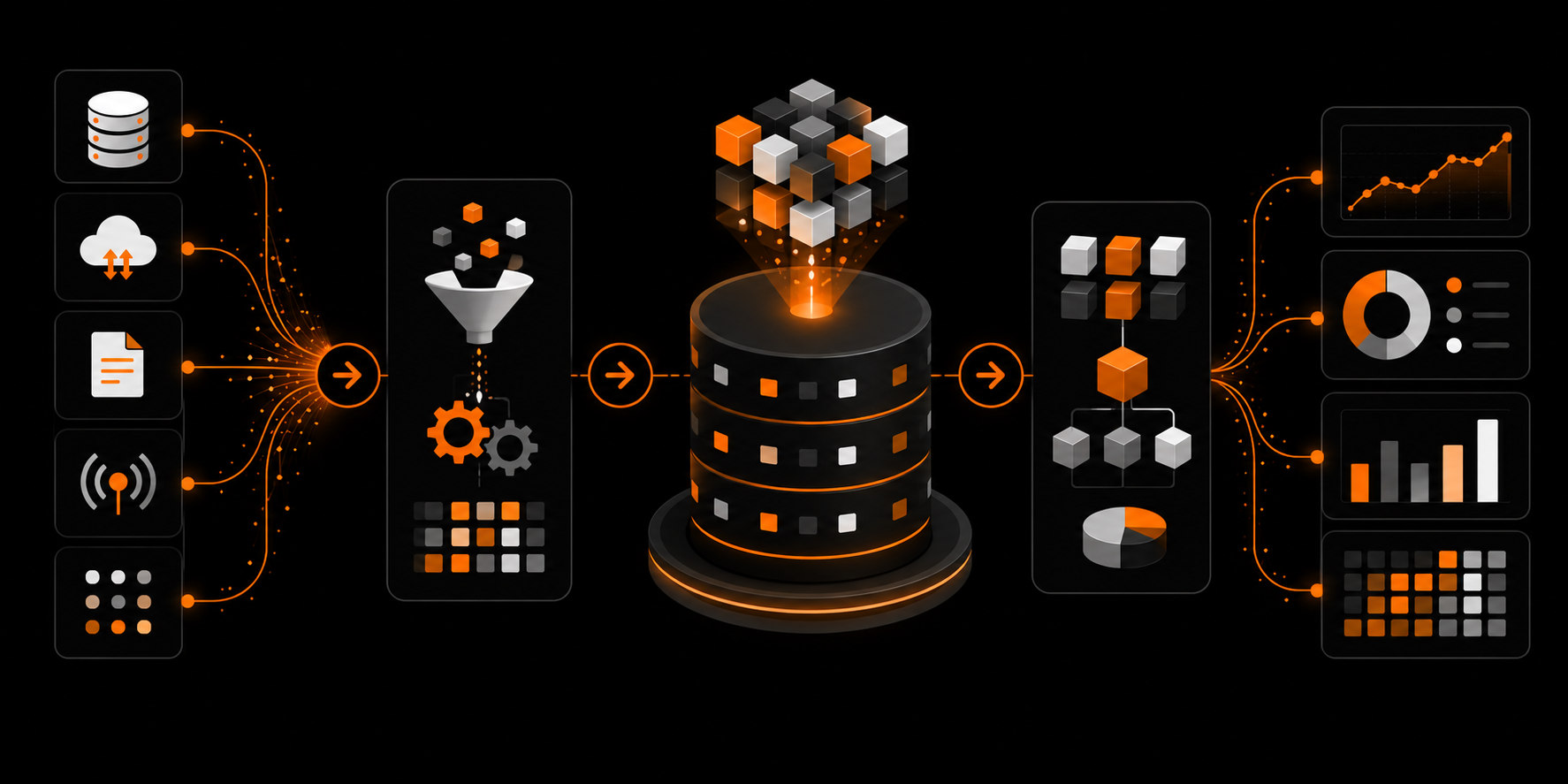
A data warehouse includes several core components.
- Data sources
- ETL / ELT processes
- Centralized storage
- Data models
- BI tools
04What we can build
We build DWH solutions tailored to business needs with scalability and performance in mind.
- DWH architecture design
- Data source integration
- ETL/ELT setup
- Storage optimization
- BI integration
- Data quality assurance
- Automation
05Data modeling
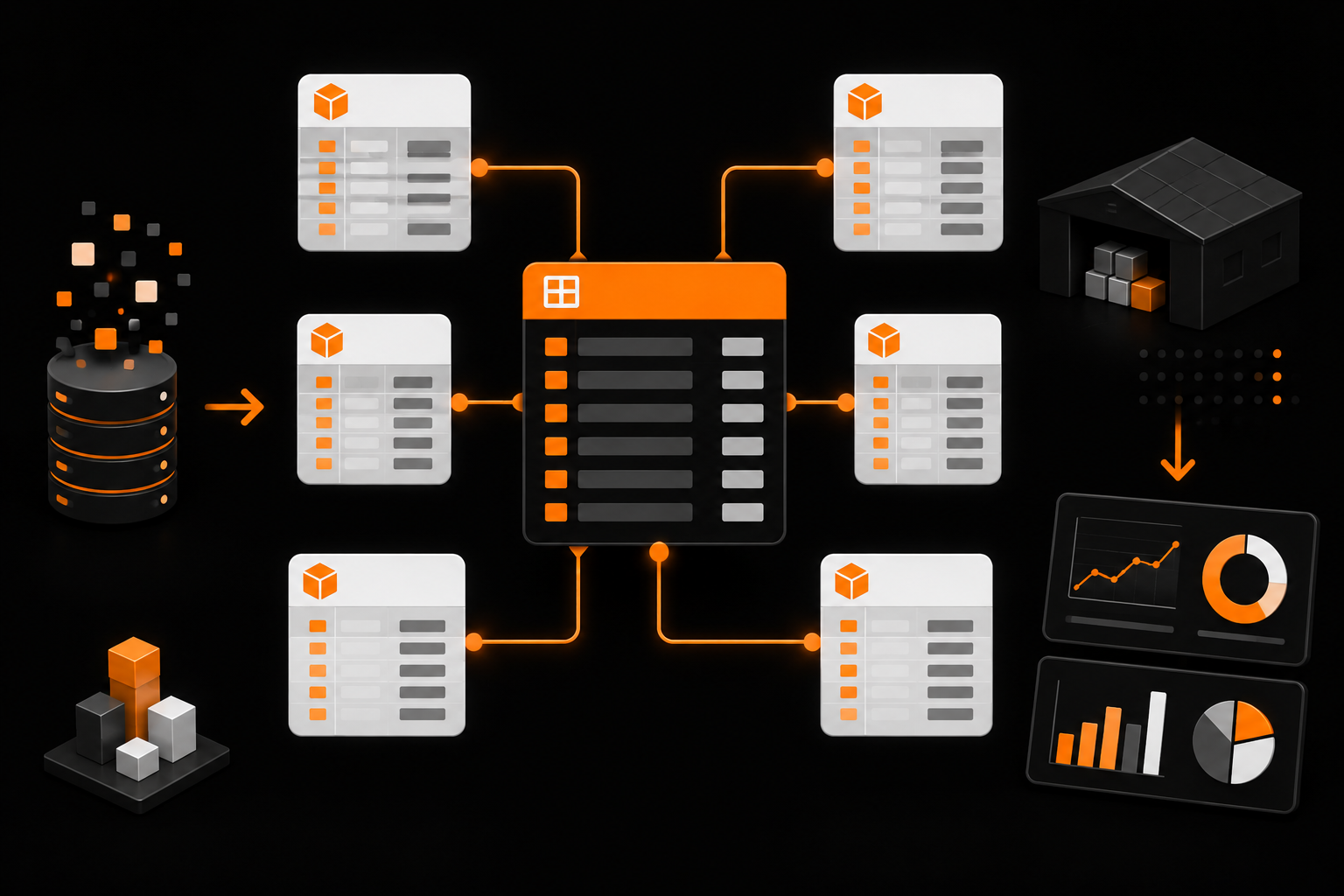
Proper data modeling is essential for effective analytics.
- Star schema
- Snowflake schema
- Facts and dimensions
- Aggregations
- Historical tracking
06Performance and scalability
DWH must efficiently handle large volumes of data.
- Partitioning
- Indexing
- Caching
- Cloud solutions
- Big data processing
07Development process
Building a DWH requires a structured approach and understanding of business processes.
- Data source analysis
- Architecture design
- ETL development
- Data modeling
- BI integration
- Testing
- Launch and support
08Why it must be done right
Errors in DWH lead to incorrect analytics and decisions.
A well-designed system ensures data accuracy and business efficiency.
09Business results
A DWH becomes the foundation for analytics and data-driven decision-making.
- Single source of truth
- Better decision-making
- Faster analytics
- Process transparency
- Scalability

Consultation request
Want to discuss a solution for your business?
Describe the task, and we will help define the architecture, implementation stages, and a practical delivery plan.