
Containerization & Orchestration (Docker, Kubernetes)
We implement containerization and orchestration (Docker, Kubernetes) for scalable, reliable, and manageable applications.
Containerization is the process of packaging applications and their dependencies into portable containers that run consistently across environments. Orchestration manages and automates large numbers of containers.
Docker and Kubernetes have become industry standards for modern application deployment, providing flexibility, scalability, and reliability.
01When businesses need containers
Containerization is essential for scalable and complex systems.
- Microservices architecture
- Frequent releases
- Scalable systems
- Cloud environments
- DevOps workflows
02What Docker and Kubernetes solve
Containerization simplifies application management.
- Application isolation
- Simplified deployment
- Scaling
- Load management
- Automation
03Docker
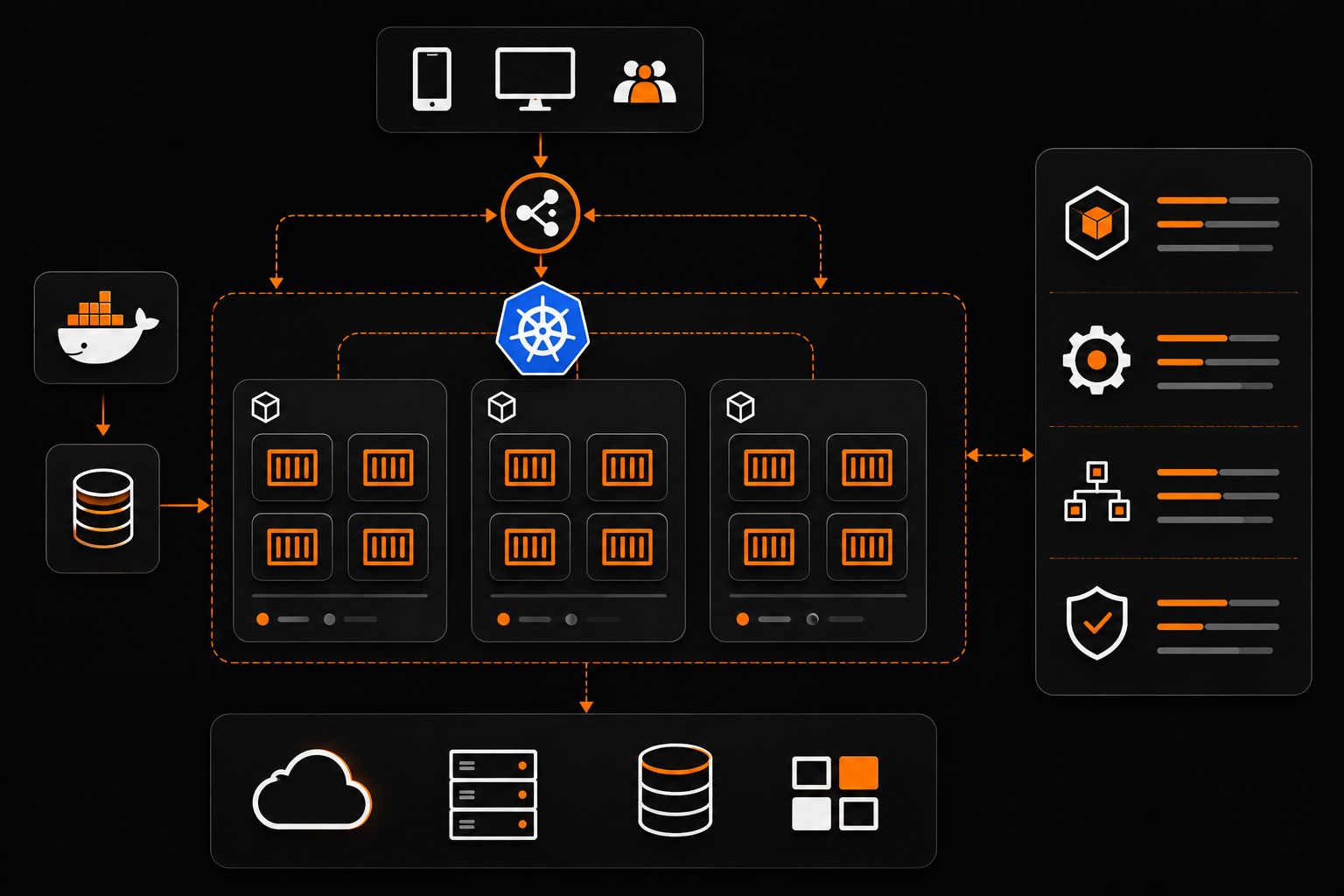
Docker is used to build and run containers.
- Container creation
- Dependency management
- Environment isolation
- Simplified development
- Environment consistency
04Kubernetes
Kubernetes manages containers and ensures scalability and fault tolerance.
- Auto-scaling
- Load balancing
- Container management
- Self-healing
- Deployment automation
05What we can build
We implement containerization and orchestration tailored to your project.
- Docker setup
- Docker Compose
- Kubernetes deployment
- Cluster setup
- CI/CD integration
- Monitoring and logging
- Infrastructure optimization
06Benefits of containerization
Containerization improves development and operations.
- Portability
- Scalability
- Reliability
- Fast deployment
- DevOps efficiency
07Implementation process
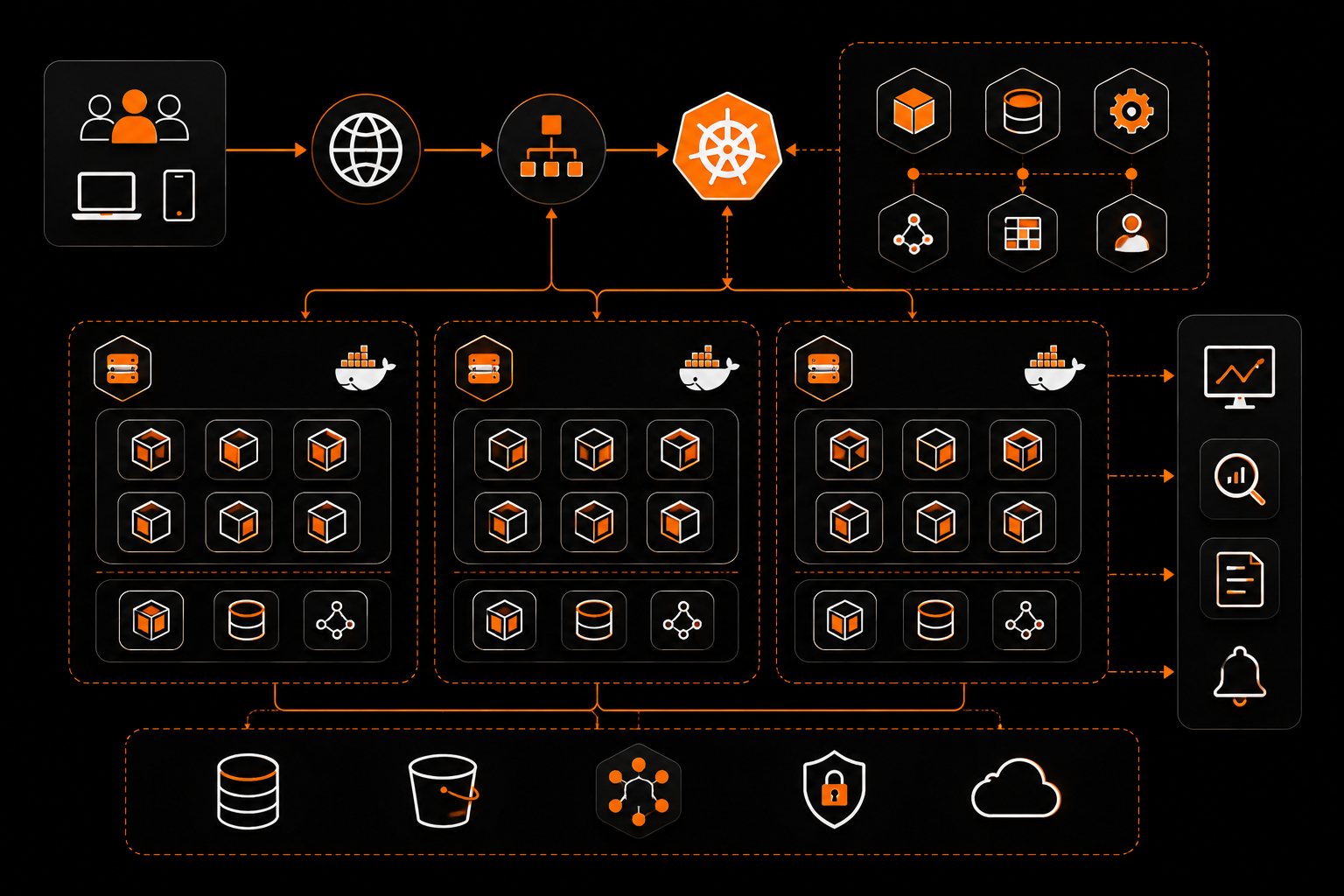
Containerization requires proper setup and planning.
- Architecture analysis
- Containerization
- Environment setup
- Kubernetes deployment
- Testing
- Launch
08Why it must be done right
Incorrect setup can lead to instability.
Proper implementation ensures reliability and scalability.
09Business results
Containerization becomes the backbone of modern infrastructure.
- Flexibility
- Stability
- Scalability
- Cost efficiency
- Growth enablement

Consultation request
Want to discuss a solution for your business?
Describe the task, and we will help define the architecture, implementation stages, and a practical delivery plan.